

Headlines about private equity, private credit, and other alternative investments often focus on fundraising slowdowns, redemption requests, or market uncertainty.
Those reports can raise concerns, especially for financial advisors and individual investors evaluating long-term portfolio decisions. Yet, industry experts argue that headline risk does not always reflect the actual performance or role of alternative investments.
Discussions at Morningstar’s investment conference in Chicago highlighted why careful analysis, liquidity planning, manager selection, and diversification matter far more than short-term market narratives.
Why Advisors Are Asking Tough Questions

During a keynote discussion at Morningstar’s conference in Chicago, attended by nearly 2,000 investment professionals at Navy Pier, Morningstar CEO Kunal Kapoor raised a question many financial advisors have been considering.
Kapoor acknowledged that Blackstone had continued attracting capital successfully. At the same time, he pointed to a broader trend across the industry.
“There has been a noticeable slowdown in institutional fundraising.”
He then addressed the question that naturally follows for many advisors.
“Why is private equity slash private credit actually coming to us now when they’re struggling elsewhere to raise capital?”
The question reflected growing interest in whether alternative investment firms are expanding into retail markets because of opportunity or because institutional fundraising has become more challenging.
Blackstone’s Perspective on Retail Investors
Jon Gray, President of Blackstone, responded by placing recent fundraising figures into context. He noted that the firm raised nearly $70 billion during the first quarter, with approximately half of that capital coming from institutional investors. According to Gray, serving individual investors is not a recent strategy driven by changing market conditions.
Instead, Blackstone has focused on financial advisors and retail investors for 25 years. Gray described individual investors as an underserved segment when it comes to accessing private investment opportunities.
He also emphasized that selecting the right investment manager matters as much as choosing the investment itself.
“Is this manager committed to the space? Do they have the infrastructure? Can they deploy capital effectively in the semiliquid world? Are they committed to transparency and conducting evaluations the right way?”
Gray added that strong manager quality and long-term commitment can make alternative investments a valuable part of a diversified portfolio when handled appropriately.
Looking Beyond Market Noise
The conference featured several discussions examining private investments from different angles, including risk, fees, diversification, liquidity, and long-term returns.
Although many panelists represented firms involved in alternative investments, the conversations also focused on helping advisors understand both the advantages and limitations of these assets.
One day before the keynote discussion, Kapoor announced that Morningstar’s wealth division had partnered with Apollo Global Management, Franklin Templeton, and JPMorgan Asset Management to introduce model portfolios combining public and private investments. Kapoor explained that the goal was to bring together independent research, disciplined asset allocation, and transparent pricing within a single investment framework.
Even with new investment models entering the market, experts repeatedly stressed that every alternative investment should be evaluated on its own structure, objectives, and risks rather than broad industry headlines.
Four Factors That Matter Most

One panel explored liquid alternative investments, which allow investors greater flexibility than traditional private assets that often require long lock-up periods.
Catherine LeGraw, Partner and member of the Asset Allocation Team at GMO, outlined four factors investors should examine before selecting these strategies:
1. After-fee returns
2. Correlation with other portfolio assets
3. Investment opportunity
4. Leverage
LeGraw explained that investors first need to identify exactly what they expect from an investment before judging its performance.
“It’s critical to know, what do you need to get from these strategies and how is that going to happen, how are they going to deliver on that promise? Those are our four pillars to go after what we need.”
Her comments reinforced an important point discussed throughout the conference. Alternative investments should not be viewed simply as return-generating assets. Instead, they should be assessed based on how they contribute to the broader portfolio, manage risk, and support long-term investment goals.
Diversification Still Plays a Central Role
Building a portfolio with assets that respond differently to market conditions remains one of the most reliable ways to manage investment risk. Michele Freed, Head of Research for U.S. Model Portfolio Solutions at BlackRock, explained that diversification works best when investments have low correlation with one another.
“That is sort of the holy grail, something that adds returns and reduces risk. We like to have different types of assets that have low correlation to each other that are each providing ballast against different types of risks.”
Traditional assets such as gold have long served as portfolio diversifiers. Today, some investors also consider cryptocurrencies, particularly Bitcoin, for a similar purpose. Juan Leon, Senior Investment Strategist at Bitwise Asset Management, said Bitcoin behaves differently from stocks and bonds, although its performance often depends on changing regulatory policies and political leadership.
“It has different return drivers than stocks and bonds. You want these different assets in a portfolio, and you want to diversify the diversifiers in the portfolio. I like to say that bitcoin and gold rhyme over a decade but diverge over a quarter.”
Global events can quickly shift market behavior. Greg Sharenow, Managing Director and Portfolio Manager leading the commodities group at PIMCO, pointed to changing AI valuations, oil price swings, and geopolitical tensions, including the war involving Iran, as examples of how multiple factors influence commodities, gold, and cryptocurrencies at the same time.
“2026 is only six months old and I feel like I might have aged seven years like a dog.”
Liquidity Deserves Equal Attention
Alternative investments cover a broad range of products, making comparisons difficult without proper context. Ranjan Bhaduri, Founder and CEO of Bodhi Research Group, advised financial professionals to separate portfolios into individual components before evaluating performance. Comparing liquid alternatives with illiquid investments often creates unrealistic expectations because both serve different purposes.
“The best I think an advisor can do is break the portfolio into the different components. Liquidity itself has a value. From a behavioral finance perspective, human beings tend to underestimate the value of liquidity.”
Brian Portnoy, Founder and CEO of Shaping Wealth, encouraged investors to begin every evaluation with careful analysis rather than assumptions.
“We know that, underneath the tent here, we’ve got eight, 10, 12, 15 different subcategories, so it’s not difficult at all to imagine the diversification benefits. Healthy skepticism is where we should start.”
LeGraw added that GMO follows a disciplined strategy by reducing exposure to assets that have appreciated significantly while increasing positions in overlooked opportunities after evaluating future return expectations against current valuations.
Looking Past Private Credit Headlines
Private credit has faced increased attention because of redemption concerns and rising default fears. Brad Marshall, Global Head of Private Credit Strategies at Blackstone, said headline coverage often ignores the protections built into senior lending structures.
During more than two decades at Blackstone, Marshall said the firm experienced only 36 defaults among thousands of companies financed through its private credit platform.
“What gets lost in the storyline is, of course there’s going to be defaults… because the asset class has so much yield, yield is incredibly defensive from a return standpoint.”
He added that senior lenders often retain control of businesses during defaults, improving recovery opportunities over time.
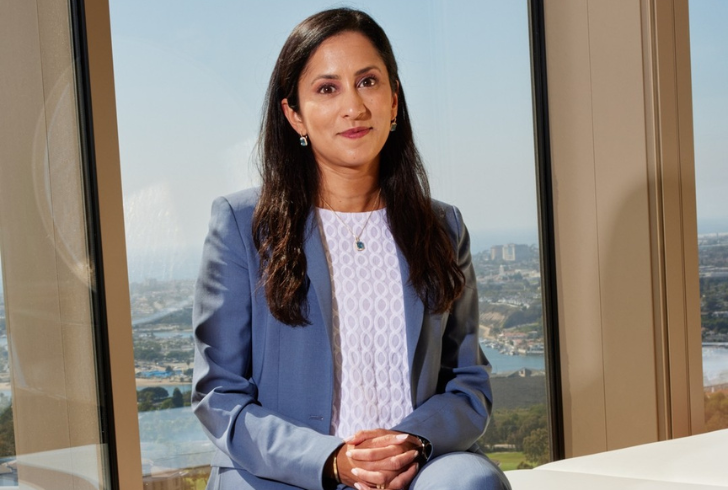
Liquidity planning also plays a major role. Caitlin Nemeth, Portfolio Manager for the Cliffwater Corporate Lending Fund and member of Cliffwater’s credit research and investment team, warned that investors should prepare for liquidity needs long before market stress appears.
“If you’re starting to think about redemptions at the time of stress, you’re too late. You need to be thinking about your liquidity out of the gate.”
Sonali Pier, Managing Director at PIMCO, Lead Portfolio Manager for diversified income, and Co-Manager of the firm’s U.S. leveraged finance desk, cautioned against judging investments only by returns or assuming private markets always offer better opportunities.
“It’s not necessarily about public or private outcomes, it’s about adequate compensation for the difference in liquidity, complexity and economic sensitivity.”
Pier also noted that higher base rates have created attractive fixed-income yields, allowing many investors to pursue liquidity, diversification, and quality simultaneously rather than choosing only one objective.
A Balanced View Matters
Interest in alternative investments continues to expand, including proposals from the U.S. Department of Labor that could give more 401(k) investors access to these assets.
At the same time, firms are adjusting products to meet retirement investors’ expectations. Gray explained that Blackstone is considering more flat-fee structures because retirement accounts generally involve lower distribution costs and longer investment periods.
Across every discussion, one message remained consistent. Headlines may highlight fundraising slowdowns or redemption concerns, but investment decisions require a broader review of liquidity, diversification, fees, manager quality, valuation methods, and long-term objectives.
Looking beyond short-term market narratives allows investors and advisors to evaluate alternative investments based on fundamentals instead of temporary market sentiment.